Imported species record
Source review pending · not a care recommendation
California Kingsnake
Lampropeltis californiae · Colubridae
This page preserves an imported legacy dataset record for discovery. Values below are unverified and must not be treated as a ReptBase source-audited husbandry recommendation.
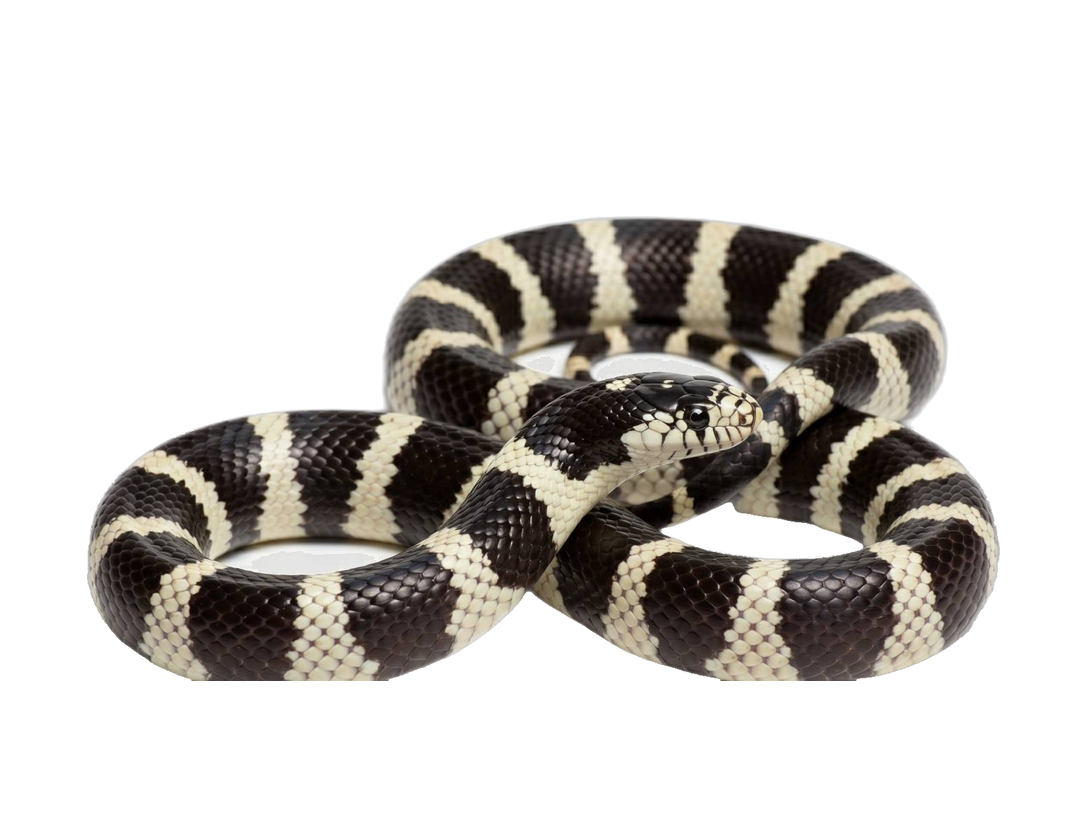
01 / Imported record summary
Legacy dataset reference only
The imported legacy record states: California kingsnakes are slender, active colubrids native to California and the American Southwest. They are famous for their immunity to pit viper venom and their habit of eating other snakes in the wild. In captivity they are excellent pets — hardy, feeding well on frozen-thawed mice, and available in many color morphs.
Imported native region: Western North America (unverified)
02 / Recorded values
Recorded legacy values
Recorded legacy values below are imported and unverified. They are not ReptBase recommendations.
- Imported care-level label
- beginner unverified
- Imported adult size
- Up to 120 cm unverified
- Imported lifespan
- About 20 years unverified
- Imported diet type
- carnivore unverified
- Imported habitat pattern
- temperate unverified
- Family
- Colubridae
- Imported enclosure dimensions
- 120 x 45 x 45 cmImported · unverified · length x width x height
- Imported ambient band
- 72-80°FImported · unverified
- Imported basking surface
- 85-90°FImported · unverified
- Imported humidity band
- 40-60% RHImported · unverified
The imported legacy record states (enclosure): Very active and known escape artists. Ensure the enclosure is very secure with locking lids.
The imported legacy record states (diet): Opportunistic feeders. In the wild, they eat other snakes, including rattlesnakes.
The imported legacy record states (behavior): Very hardy and tolerant of handling. May 'rattle' their tail in substrate when nervous.
The imported legacy record states (social): Cannibalistic. Must be housed alone.
Foods listed in the old dataset imported · unverified
- Mice (appropriately sized)
Signs listed in the imported record
- Clear eyes
- Active tongue flicking
- Strong muscle tone
- Smooth scales
Imported · unverified
Concern signs listed in the imported record
- Lethargy
- Wheezing
- Regurgitation
- Weight loss
Imported · unverified · not a diagnosis
03 / What has not been verified
This value has not yet completed a ReptBase source audit
- Enclosure minimums and product recommendations
- Heating, UVB, humidity and substrate protocols
- Feeding ratios, schedules and supplementation claims
- Social-housing claims
- Health lists as diagnostic guidance
- Setup-cost figures as live market prices
Do not treat this as a complete care recommendation.
04 / Questions to verify before using the record
Check before acting on any imported value
- Which primary sources support this enclosure size for the adult animal?
- Have heat, UVB and humidity been measured in a comparable enclosure?
- Does a reptile-experienced veterinarian agree the listed signs are actionable?
- Are diet notes current for the life stage you are planning for?
- Is a source-audited ReptBase guide available for a better-supported alternative?
05 / General measurement and veterinary safety note
Measure conditions. Seek veterinary care when needed.
Outdoor climate and imported bands do not set enclosure targets. Enclosure dimensions, materials, ventilation, heat-source distance, thermostat control and measured warm/cool sides change every decision.
This is not a diagnosis. Sudden weakness, breathing difficulty, seizures, major injury or collapse warrants urgent contact with a reptile-experienced veterinarian.
06 / Editorial status
Imported species record
Care by location
California Kingsnake care profiles by city
Seasonal setup-pressure estimates for each recorded city. Each profile links the species range to outdoor normals and is a planning aid, not a recommendation.
- Honolulu excellent
- Miami good
- Perth fair
- Sydney fair
- Brisbane fair
- New Orleans fair
- Tampa fair
- Cleveland fair
- Virginia Beach fair
- New York City fair
- Calgary fair
- Chicago fair
- Denver fair
- San Francisco fair
- Toronto fair
- San Diego fair
- Buffalo fair
- Charlotte fair
- Edmonton fair
- Kansas City fair
- Los Angeles fair
- Oklahoma City fair
- San Antonio fair
- Washington fair
- Albuquerque poor
- Austin poor
- Dallas poor
- London poor
- Raleigh poor
- Sacramento poor
- Salt Lake City poor
- Anchorage poor
- Detroit poor
- Jacksonville poor
- Melbourne poor
- Omaha poor
- Reno poor
- Houston poor
- Milwaukee poor
- Minneapolis poor
- Montreal poor
- Orlando poor
- St. Louis poor
- Vancouver poor
- Atlanta poor
- Baltimore poor
- Boise poor
- Cincinnati poor
- Columbus poor
- Indianapolis poor
- Philadelphia poor
- Phoenix poor
- Richmond poor
- Seattle poor
- Tucson poor
- Boston poor
- Des Moines poor
- Little Rock poor
- Louisville poor
- Memphis poor
- Nashville poor
- Pittsburgh poor
- Birmingham poor
- Las Vegas poor
- San Jose poor
- Portland poor